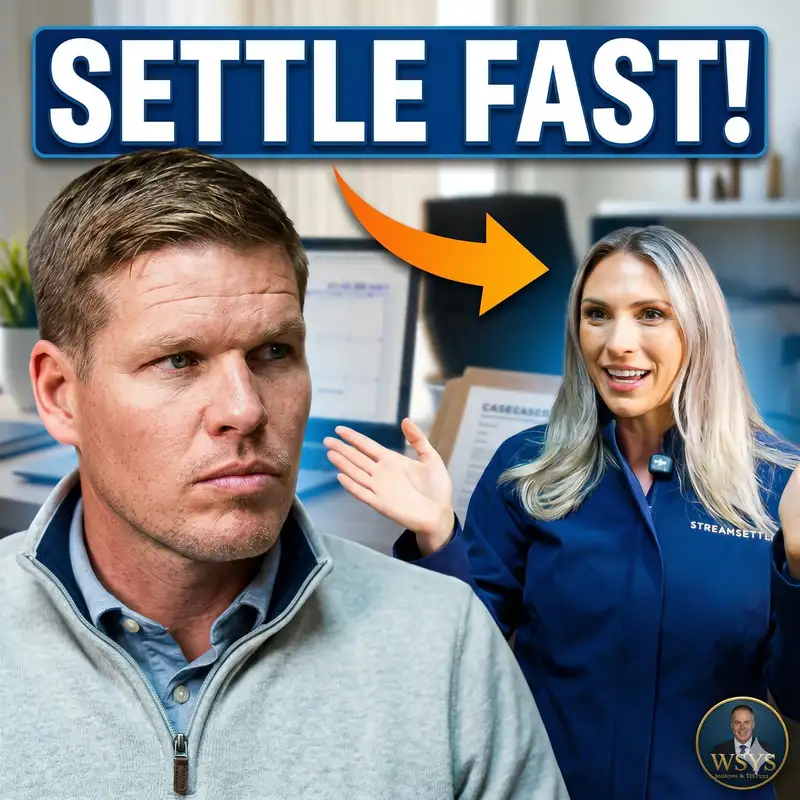
The $100 Billion Problem Nobody Is Solving — Until Now | Joe & Chrysa Jones, Founders Stream Settle
Download MP3[00:00:00] In the context of a civil lawsuit, you're talking years of delay that is caused by posturing. So both parties are able to put their numbers into our platform, and the beauty is no one can see it. So it is secret to them. It doesn't, it's not revealed to us as a company. It's not revealed to your opponent.
It stays completely secret. And so the parties can be truthful about that number and then call it. A lot of defense attorneys who have told us, no, we have plenty of work. We're looking for those solutions to resolve our client's problems faster, and so we actually had two commercial litigation firms.
One that's a top 50 global big law firm, get on our platform on their own. They found us. They self onboarded. Self-trained and got a settlement within five minutes on our platform. No kidding. Within five minutes. Within five minutes, that's gotta be a record. What was the biggest surprise that you had in growing the company?
A similar question, but just from an entrepreneurial company perspective. I will say we were surprised when [00:01:00] today's guest for building at the intersection of law, insurance, negotiation, and technology. And they're taking aim on a problem that costs the legal and insurance industries more than $135 billion every year.
Christa Jones is the COO and Co-founder of Stream Settle, and Joe Jones is the company's CEO and co-founder. Together, they're rethinking how dispute to get resolved by eliminating one of the biggest inefficiencies in negotiation. Posturing instead of endless back and forth, inflated demands, low ball offers, and years of unnecessary litigation stream.
Settle uses secure technology to determine whether both sides already have a deal without revealing either side's number. If there's overlap, the case settles. If there isn't, nothing is disclosed and nothing is lost. What makes this conversation especially interesting is that this idea didn't come from outsiders guessing at a problem.
It came from firsthand experience. Krisa came from education and then helped run [00:02:00] Joe's personal injury law firm. Joe served as a lawyer in the Marine Corps and later practiced Illa injury law where he repeatedly saw cases dragged out for years because both sides were negotiating off posture instead of truth.
That pain point eventually became the foundation for stream settle. In this conversation, we talk about why the traditional negotiation process is broken, how stream settles triple blind structure works, why their risk-free pricing model matters, what they learn from bootstrapping and selling in a conservative industries, and how this technology could eventually reshape not just litigation, but other markets like real estate as well.
And if you do here, I'm Joseph j Razer, a former Wall Street lawyer with more than 20 years of experience across a hundred billion dollars in transactions. I'm also a former entrepreneur having launched two businesses. One I built and had a seven figure exit in less than three years. I rolled that into a national retail chain, lost it all during the pandemic, but I've rebuilt that.
I've generated tens of millions of dollars in both B2B and B2C [00:03:00] sales. I've hit highs, had lows, and rebuilt from scratch. My law firm rates for PLLC focuses on mergers and acquisitions to buy and sell companies and assets as well as securities laws to raise capital. I'm licensed in both New York and Texas.
My podcast, wall Street to Wall Street is where we bring you real business lessons from seasoned operators, founders, funders, and executives who've actually lived and breathed businesses, ups and downs. I'm not getting legal advice here. Always consult your attorney about your situation. Enjoy the show, Joe and Chris said, thank you for being here with me today.
This is going to be an interesting conversation, particularly because I'm a lawyer and I do negotiate settlements, and so I know the pain points here and I'm excited to hear about how you came up with this and where you're going. But before we get into that, maybe you can both, each briefly share with me a little bit about your background and, what, if anything in your upbringing, your childhood kind of gave a spark to entrepreneurship or if this is something completely new to you? Sure. So thanks so much for having us. First of all, my [00:04:00] background is a past life. In a past life. I was an elementary school teacher. I taught third and fourth grade for about eight years, so totally different world.
And then I was Joe's Law Firm administrator when he started his personal injury firm. So I lived in that world of disputed claims for a while and saw the problem for myself as, as well. But I think. Part of my background that helps us today is I do a lot, people do a lot of educating, and so I think I, I find myself pulling from my classroom background, what I'm trying to teach about, what true settlement thresholds are, and trying to educate our adjusters and plaintiff lawyers on how the system works and the psychology behind putting our numbers in.
Okay. Very good. Yeah. Thanks for having us here. Really happy to be on the podcast. My background, I grew up with entrepreneurs around me. I have uncles that started businesses. I saw that. Witness them being their own boss. And I always looked at that as something that I would like to do. One day I started my career as an attorney and in the Marine Corps actually, and I did criminal defense in the Marine Corps, and that was a great job.
And then came out and did personal [00:05:00] injury and so that's where we really started feeling the pain point. And then, yeah that's pretty much it. That's good. Thank you. Thank you both for that. So share a little bit about that. What, because you're getting to how you came up with this idea, which I think is brilliant.
What pain point and at what point did you see that pain point? Talk about that. Yeah, so in the context of a, a typical negotiation, like if you're buying a house or a car, we posture and, if the car is listed for 50,000, you might make an offer for 35 or 40 to the car salesman, and that posturing might cost you minutes or maybe weeks in delay.
But in the context of a civil lawsuit. You are talking years of delay that is caused by posturing. And so there was just no, there was no way at the time for us to convey our true settlement threshold, that's what we call it, which is, for the plaintiff lawyer, that's gonna be their absolute bottom line for the insurance company or the defense counsel.
That's gonna be their very top number that they'd be willing to pay to get the case settled. [00:06:00] Instead, we were using very flawed data, and that is our posture number. So two parties would look at a case. And there will go, oh, you're demanding a million. We're offering 20,000. We're just way too far apart.
We need to work this up. And that was that is the status quo in a lot of cases. The problem there is they're using flawed data points. They're using postured numbers to make that critical decision of can this case settle now? And to answer that question, and instead of using the true settlement thresholds of the parties, what are the parties actually willing to do?
And so we found ourselves in a really heavily litigated trucking case. It was about to go to trial, but I knew in my gut that this case was gonna settle. I just, there was no way I couldn't say my number. They wouldn't say their number. We were both just being stubborn on our postured numbers, trying to get the best deal for our respective clients.
But if there was a safe place where we could have just tested those numbers, we would've found overlap. We would've gotten resolved much [00:07:00] sooner. And so that's where the idea came from. And then so you went out and started the company? Or what happened at that point? Because typically there's a there's a gatekeeper.
There's a gatekeeper. Yes. So I remember this moment vividly. I'm in the kitchen making a cup of coffee, and I hear Joe shout from the shower back in our bathroom. He's I got it. I got it, Chris. I got it. I got this idea. And I'm like, what? And then my initial thought is, oh God. Another idea we had, he's had many ideas along the way, and most of them don't make it past the gatekeeper, but this one, as they probably shouldn't in some instances, no offense, right?
There's not. But he told me about this idea, and I was like, first of all, someone is certainly already doing this. There's no way, there's not somebody doing this already. It's just too good of an idea. So we did a lot of digging, had a lot of scares with chat GBT telling us, oh, there are companies out there that do this already.
It turns out there was not, so there was double blind, but there wasn't a triple blind. So immediately almost we were like, all right, no one's doing this. We have to be the ones. And so pre [00:08:00] immediately started downsizing the firm and shifting our focus to the build and really had our heads down in the build for.
Quite some time to see if this was even possible to compare two numbers that we couldn't see and in West. So that's the origin story. And so you started winding down the law firm and so we're completely bootstrapping. We have this idea, we're not going to raise funding, we're going to bootstrap.
So what was the timeframe between, I know winding down the law firm isn't so easy. It's probably still, trickling on. I think you had shared that with me earlier, but at what point did you say, okay, we're going to start this company, we're going to launch. How long did it take you to get to where you had a viable proven product where you could go out there and start onboarding clients?
So we really, we adopted the Lean Startup method. We really wanted to focus on let's get an MVP out there, let's get some validation before we throw a ton of money at this. But then, like the perfectionist side of us got in the way and we made it we probably spent too much on the build and we tried to make it, perfect for the market.
But it probably [00:09:00] took, I would say, a year before we got up and were, having customer, really having meaningful customer conversations about adoption. And is this, was this your first entrepreneurial venture? I know you had other ideas, but this was the first time. Yeah. If you ca, if you count a law firm, is one then that but.
Definitely this is a different animal, right? Much different. It's different. And so morning from that experience, would you say that you should have gone to market six months in or, because this is a common problem, right? You can spend endless amount of time. You never really know until you go to market, whether you're doing something that will fit the market.
And so just roughly you say. Maybe you should have waited three months and gone to market nine months, six months. 'cause you waited 12. I think we went as soon as we could go. Okay. Okay. And that was just because, our target customer was an insur, was an insurer. We needed an insurance company to say, Hey, yeah, we'll try this out.
And there's just a lot of, it's a lot of red tape, so you're talking to these. You have to find the right person to say yes, and then they're gonna kick you to somebody else who has to say yes, and they're gonna kick you to somebody else who has to say [00:10:00] yes. And so there's a lot of areas where I can go wrong, but I feel like we got out there as soon as we could, once we had a viable product that we could sell them and made the connections that we needed to make met the pe, met the buyers, had great conversations with them, and were able to kick off a pilot.
Probably we probably kicked off the pilot a year and a half after the build, right? Or after we started October of 23, got our first customer in January of 24, so Wow. So it was a length left out with the timing. Yeah. Yeah. No, and with our first customer, they've just been. Unbelievable for partners, for us, for sure.
Talk to me about that, because this is a completely different kind of process and it's not like you're dealing with something trivial that this is settling negotiations. How was it explaining this to to, how did, how was it coming up with this pitch and explaining the concept because you're still new and fresh to it.
How did that how was that taken and how did you get over any objections? So I think we, we knew the problem so well, and the people that we're selling to are living the same problem, and so we didn't have to really explain the problem. Everybody [00:11:00] knows that this is an issue and that everyone is wasting a ton of money trying to get to the in line, right where you could have gotten there much sooner, saved a bunch of money, saved a bunch of time, but there was just really no way to get there.
So really, we just gave them away a safe place. I wouldn't say that our challenge was understanding the problem or like everybody that we really talked to about it on both sides. Has understood that this is a problem and they've all said, oh yeah, we'll use it, but why would the other side wanna use it?
And so what's in it for them? And that was a pretty good take for us to be able to, navigate that problem. Our challenge has been our biggest challenges with our first customer were really product related. We, what we thought we built was absolutely perfect.
And then as soon as you get it out in the wild. And they start using it. Luckily, like I said, our partners are amazing and they are very forthcoming with us about what was too tricky or what maybe wasn't gonna work with their process. And so we did a lot, we spent a lot of time the first year revamping our product and making it two different modes where you can pick which modes you wanna use to make it easier on them.
I would [00:12:00] say that was our biggest challenge with our first year. So when you took it to market, you identified a couple of bugs or problems that had to be solved, and this was with your initial customer and then you guys pulled back, refined it, and then you went out, played with them for a while, but then you were able to sell it on other customers.
Is that correct? I'm following that. Yeah. I us through the long haul. Okay. They didn't really pull back. They just stuck with us like, okay. Yeah, they're rock stars that they are and they just helped us along the way, so yeah. Held our hands through that process. Yeah. So Joe, you are in the shower. You have this epiphany, right?
But you are realizing something that I would imagine you already knew was an issue, right? Posturing was there your whole career. Sure. Costing real money, real time, like you said. What happened? Was it just finally all clicked and you were putting on your conditioner and it hit you?
Or was there something that triggered and what you were doing? I know you gave the example of the case you were doing with the trucking guy, but I'm sure you had that scenario many times over your years. What do you think, why didn't this come to you earlier? Was it something going on in the tech field or something you'd seen?[00:13:00]
Yeah, you I don't know what I can say on that. I was big into crypto from early on. I think I say early on in 2015. I started investing in Ethereum when Ethereum was still like $11. And and then it spiked up. And so I learned a lot about crypto. I was really fascinated with the technology.
And so that, I think maybe that was the seed, because the first time I thought about this and conceptualized it, I was thinking about. Using smart contracts, if you're familiar with that. But it's basically using the blockchain, you'd have a smart contract that basically acts like an escrow. And so that was the initial way we would do it.
But yeah I think it's such an accepted difficulty and bottleneck in the industry and I just had never thought that there may be a solution for it. So before we get further, then, walk us through like the traditional method. Is just your traditional settlement process that everyone understands.
Like you said, you get, you laid it out. Walk us through stream Federal, just at a higher level and how it works. Yeah. So stream, settle, we try, we made it very simple. So [00:14:00] basically we have, we asked for enough information just to populate the final settlement certificate at the end. So the parties come in, they create the claim, it takes just a minute to create the claim.
And then immediately after that, they can go ahead and put in their true settlement threshold, which for the defense side is gonna be the very top dollar they're willing to pay to get the case done. For the plaintiff's side, it's gonna be the very bottom line that they're willing to accept. So both parties are able to put their numbers into our platform.
And the beauty is no one can see it. So it is secret to them. It doesn't, it's not revealed to us as a company. It's not revealed to your opponent. It stays completely secret. And so the parties can be truthful about that number. And then our system instantaneously, once both numbers are in our system, instantaneously does a comparison and to see if they overlap, if they do, the parties have a binding settlement, if not.
Nothing is lost and nothing is revealed, no fees are charged. So we, it's truly risk free to both sides to test to [00:15:00] see if the deal exists in this moment. And one of the things I love you, you refer, you referred to fees. One of the things I love, I think I remember I seeing on your website your if fees, the cuts like 1%, right?
So something like that. Which correct. If you are saving three years of litigation costs, I a 1% fee. It's a no-brainer. And so that's a huge sell point. And there's no fee if there's no settlement. Is that what you're saying? That's correct. Okay. Yeah. So this system has been in place for hundreds of years the way it was done, pre stream, settle.
And but we've had technology that could probably do this for at least a decade or maybe a decade or two. I don't know. My point is why wasn't this solved before? Why wasn't Crystal Wright that someone out there had already done this? Who benefited from this to keep this system this way for so long?
So the encryption technology that we use is actually just, it's relatively new. 2019 is when it was created. And so because the way that we're able to detect overlaps in the party's positions, [00:16:00] all, there's a series of calculations that are done on the user's machines. And then those numbers pass through our server in an encrypted format.
And so it keeps us triple blind or it keeps us blind. And that's why we say triple blind 'cause each party's blind and then we're blind to the numbers as well. And it's secure because it's all, it's very secure. Yes. And then the parties have nothing to fear, about you could have used, for instance, you could have used a mediator to do the same thing.
Both sides could tell the mediator their number, and then the mediator could just let you know if they overlap or not. The problem is. There's not always trust there, right? One side's gonna trust the mediator more than the other, and so it just incentivizes more posturing. And so yeah, at this point we were able to make this technology.
I think the timing was perfect for us, but there was a company back in the nineties who had a double blind comparison. But they never really got traction in the legal industry. And I think there was a number of reasons why, but. They're now in the FinTech tech space and doing great things from what I understand.
And then [00:17:00] talk to me about, as a new entrepreneur, it's a new world, obviously. You've got, you have this great idea, it's being unlocked because the technology's there, cloud computing and everything's bringing cost down ability to start a company now is nominal. I know it's expensive and you've put a lot of money into this, but compare it to years past, you didn't have to go out and raise capital and do this, you, it was within your reach. You build this wonderful company, you have this beautiful idea using this technology, you're leveraging, how do you protect it? How do you protect something like this? Yeah, so we're currently, we filed for a patent, but we're currently patent pending on a triple blind aspect to our platform.
So we're hoping that's granted. But I think our biggest moat to really protect our IP and everything is the relationships that we've formed in the industry. Or, we've. For instance, we've secured a judicial mandate in racist county, which is the 17 largest county outta 254 in Texas, and they're requiring parties to use stream, settle in civil cases.
Wow. That's huge. So yeah, we're [00:18:00] super, super excited about that because you should be huge. And so I think the more we can do stuff like that, the more we can show our customers that we are the standard and we set the standard on this. And then the more likely we are to remain the category leaders in this area.
So because of validation, even if the IP protection were to lapse or not give you the level of protection you think you have because of the higher level execution that you're able to, with the deployment and getting validated Because having a bunch of judges agree, and you shared with me earlier that.
They didn't even come back to you. They literally voted on the spot. To adopt the technology and mandate its usage. That's probably just as good a protection, the execution that you're doing, as much as the IP protection. Yeah. That's awesome. So who benefits? Is there anyone who would not want this?
Like who would benefit from cases not settling quickly? Yeah, so there are a lot of parties who, make their money by a claim carrying on, like experts or people who bill by the [00:19:00] hour and they're, they're motivated to continue that claim. But those are really the only parties that are actual users on both sides and everybody in the middle, really there's everybody benefits from this.
It's a win, win all the round. Yeah. Just, no. Just to add to that, I think right now our court systems are. Just extremely backed up throughout the country. Huge backlogs. A lot of these backlogs started during COVID. Some of them before them, like we're from Harris County. And in 2017 we got hit with Hurricane Harvey, which destroyed the criminal courthouse.
Criminal defendants, as have a right to speedy trial, so then their cases took precedent in the civil courthouse. And so all the civil courts were still backed up from Harvey once COVID hit. And so then, you're talking about huge backlogs. I tried a case. Last year where the record happened six years beforehand.
It's goodness. It's just huge backlogs. And so I think there's a lot of folks to benefit from this, including the taxpayers and the court administrators and the judges and everyone that goes along with that. But we think about the [00:20:00] insured who got su. Who doesn't wanna be involved in a lawsuit because they made a mistake or, were negligent in, in, in at one point in their life.
But now they've had a lawsuit hanging over their head for years. We think about the injured party who is just trying to get their life back on track after something happened to them through no fault of their own. And we get to now, contribute to making these stressors go away for a lot of people.
And that's been really rewarding for us. So that's interesting. So you have this idea you get approval and you guys work on it and we're fast forwarding two, three years and you've got this bunch of judges are like, oh my gosh, this is the greatest thing, since sliced bread.
We're on board and they're like, okay, so we can scale this. That's all great. That's the straight line hockey stick kind of growth. And I know there's a lot in between. What has been your biggest challenge transitioning from teaching and being a lawyer? What has been your biggest challenge in becoming an entrepreneur?
I think well, working together as a husband and wife in its own set of challenges for people. I think that we [00:21:00] are meant to work together. We work together prior to starting this company, so a lot of times people would assume that's probably the most challenging thing. But I think for us it's.
Just having, we, we can't turn off the work ever really. I think that's probably something that we struggle with, we continue to struggle with, and I don't really see a light at the end of the tunnel with that because we are so ingrained in this world and it becomes like our dinner table conversation and, everything in between.
What would you say is the biggest challenge? I would just from like a business aspect. Beyond that, I would say, sales was not. Easy, and it hasn't been easy, and it's a lot more difficult than what we expected. I'm coming as a plaintiff lawyer who's trying to sell the plaintiff lawyers, and I'm thinking, these are, this is my tribe.
There's no they're gonna call me back. There's not gonna be any problems with that. But it's very difficult when I say, Hey, I'm Joe from Stream Settle. The receptionist has been told, don't ever put a vendor through to my desk. And just getting, having the conversations in the audience.
But we just have to find ways around that. So we [00:22:00] attend a lot of conferences. We go to where the lawyers are and when we have the face-to-face conversation, when we have the audience with them, things are so much easier. So we've just, we've had to adapt, our expectations were one thing, our assumptions were one thing, and then you learn as you go, that's not really viable.
We need to figure out a different strategy. And we've been able to do that. Yeah. And on the insurer side too, our biggest challenge has been to close the education gap on what makes the most sense for adjusters.
So it, it's a hard tech or psychology flip for adjusters to go into our software and not at the beginning of the case, put in their true top threshold amount. They're trained and they hone their skills in on negotiating and really trying to get the safe and most they, they can on the indemnity.
And, c-suite might see that they're bleeding out of all the litigation costs, but at the end of the day, the adjusters are the ones who are using our platform. And so they might see their role as really to save the most on the indemnity. And we never think that a claim should cost as much or more to litigate than it does to settlement.
So that has been a little bit [00:23:00] of just a learning curve on our end too, just listening to the adjusters and then finding a way to make it all work to where. They still use their negotiation skills that they've honed in on in the past 10, 20, 30 years, however long they've been in the field.
Use their negotiation skills, still talk to the lawyer on the other side, convince them to put a smaller number into the platform that is still your primary job, but then at the end of the day, you need to go put your top threshold industry settle. And I think that's been more of a learning curve on our end as far as, at first we're like why wouldn't they just put their top threshold in?
No one can see it, see if you've got a settlement, it can get it done and save on all the costs. But there's just a lot of, decades of doing this the way that has always been done, which is to low ball it at first. And so that's been a big challenge I think that we're just now overcoming.
I would imagine that's a huge challenge. And how do you convince these parties who've done it is, this is the way it's always been done. How do you convince them to trust a system, a new system that they really can't see inside? It's a black box. How do you do that? So we [00:24:00] don't get a lot of, barking about the trust of the software.
Okay. If anything, sometimes the parties will tell us the numbers that they put in and be like no. Don't tell us this is simple blind. Please don't tell us what number you're trying to put in the software. And so we really haven't run into any issues with the trust because I, we are very.
Yeah we do from the beginning that, that's what our entire platform is built on trust. That's the whole point, right? If we were to expose anybody's numbers, we would just cheer ourselves in the foot entirely. So the trust hasn't really been as much of an issue as it is just changing the way that they've always done things for both sides and really convincing people to put their thresholds in.
And I think the way that we've gotten through that is, 76% of the claims that have settled on our platform have been settled, pretty lit. And I think that's been really eye-opening for both sides. Oh man, we can avoid filing suit altogether if we just see if we have an overlap at the beginning.
That's a huge savings in time and money. Yeah. Wow. Okay. So I think just using it, seeing for themselves that, oh wow this does work when I put my threshold in and it's worth it and [00:25:00] it saves us a lot more on the back end. That's what's been able to help us. And so the benefit to that, someone would say, oh, why would a lawyer want that?
And I was speaking with Joe earlier about it and the idea is a lawyer would like that 'cause a lot of these cases are having on a contingency basis, right? So they still get the result, they get it lot faster without expending all of this time and money. And they just cut to the chase.
Not that's a very high number. What is the most common reason people say, no, we don't wanna use this, we don't wanna use stream Settle. What's the resistance? Once we have conversations with folks, we have a really high success rate of getting them on the platform.
But there have been, we have some people in our just, hey, flat out, rejected category on our pipeline. And those folks usually just gravitate toward the, I don't need this. I do it my way. My way is very effective. I don't need your tool. And so they don't really care what our tool does or what value it could bring them and their clients, they immediately are just like, I like the way that I do things now and I'm not gonna change.
And I think there's such a great place in the market for people with [00:26:00] that mentality, right? They provide the stability if everybody was. Apt to just go try new technology things might be a little bit more chaotic. You need the people that are more reluctant to try new stuff. You are more generous than me because I would call them, I would call them Luddites.
Yeah. They're dial up internet. They're using your flip phone. Yeah, exactly. Those. I'll say the ones that. We do get rejected by it like that. They're like, look, this is awesome. I love this idea. If you would've caught me 40 years ago, I'd be all about it. But there's no way I'm changing now. Oh, hiring in five years.
I don't, I'm just not using it. That makes sense. Yeah. I could see that. I don't want to adopt the new technology because I'm checking out. Talk to me a little bit about coming from, again, a non entrepreneurial, other than starting your own law firm, like. How did you guys come up with, I think it's brilliant that you have a success based fee, right?
You have skin in the game here, right? You're not asking for a 1% or something higher upfront or a deposit or anything. It literally is just, it's so 1% fee. How did you guys come up with [00:27:00] that success fee? One of, one of my good friends from the Marine Corps, and he's a fantastic business coach.
His name's Robert Heath, and he told us early on, he is you just, we're trying to come up with this. Price, pricing schedule. He said, just make sure that it's an offer that no one could object to. And for plaintiff lawyers, it's we know how the game is played.
We know what risks they're facing. We know what incentives they're looking for. And so if you can price something for a plaintiff lawyer where they don't have to pay until they get paid. It's a no brainer for them at that point. And and then looking at insurers too, they're not looking to take on huge risks.
They're one of the most risk averse industries that there are. And so if we can just make everything risk free, including our pricing model. Then that's just one less objection we have to deal with. And so it's, yeah. It's been a really strong selling point for us. Yeah. We also want it to be reasonable.
We wanna do everything as, as reasonable as possible. That's like the whole premise of our platform. Everybody needs to be reasonable play [00:28:00] ball for the, to get a settlement on our platform, what reasonable with the price. We also thought, people pay for mediations and that usually happens much later in the litigation once a lot of money's already been spent and.
They pay for it and may or may not get a settlement. And so we thought, what if we could just, have a risk remodel to where you only pay if you win. And that's also, I think, just been ingrained from running his law firm and. And working on contingent cp. I think that was just yeah. See, I'm looking at it from the lens of a corporate lawyer, and so we get paid as we go along, and so it is a different lens and I guess that does lend towards a successful basis. You already came from that world, and then it's just what number do we come up with that makes it safe? Why wouldn't I give it a shot?
What's 1%, right? Yep. When we know the outlay, we're going to have. Pay for our litigator and our team members. How does this, maybe the answer is it doesn't, but do you think this aligns incentives differently or in a better way than traditional alternative dispute resolution? I think it does just 'cause you, so one of the, one of the issues that, that I think insurance companies and defense side don't really appreciate [00:29:00] about the plaintiff's side is the plaintiff's side is also often faced with just a math problem.
By the end of the litigation, they just have a math problem. They have this amount of expenses, that they've spent on the case. They have to, and they have to get their client X amount of dollars in their pocket. And so in order to make that happen as the expenses increase in order to make that happen, there's only one place the money comes from and that's their opponent, right?
And so these lawyers having this math problem, and then we're able to point that out to the insurance companies and the defense side and teach them. Look, this is a math problem, right? And the longer this goes on, the worse this problem gets. What was your original point on your, I was just trying to see if this kind of aligns incentives differently than a traditional alternative dispute resolution process.
And I think it does. It does. Yeah. I think it it, I think it just it makes it, it reduces a lot of levels of friction and frustration and it really does just hone in and bring the parties to where they are just. It's okay, we gotta come up with the number. And [00:30:00] so it just cuts out all the, all the noise, if you will.
And so that's why, and then the next question leading go going on from that is, and I know it's early days, but this is what gives you, you got your validation. Do you have data yet? So do you have your traditional, dispute takes three years and a million dollars or whatever it is.
But in our system, it's this, do we have that data yet? That is so difficult to do because all the cases that are negotiated on our platform are different. Yes. It's like the answer that all lawyers like to give. It depends. It depends. Classic. So it really, it's so dependent on the case.
We have anecdotal data, right? And we're about to push a new feature where after every settlement on a platform, it'll ask the user, how much time do you think you saved by using this? If any? How much money did you, do you estimate that you saved by using this, if any? And that way we can get more reliable data on the savings.
'cause right now it's just it's just very anecdotal. It's comparing. Sometimes apples to oranges or apples to grapes. It's or maybe apples to apples, but we, it's [00:31:00] just really hard to put that timeline together. Yeah. You almost, you need a tremendous amount of data for it to actually have some validity and getting an exit survey like that, particularly from repeat players, right?
The lawyers, because they can eyeball it and be like, I would've been right within this range, and that's gonna give you more, more ude to maybe tagging it too, because. The plaintiff, that the actual person may not know. I don't know. So interesting. Okay. This is in my mind, as a lawyer, I see this and I'm not a litigator, but I know the impact that this can have.
If this were adopted, you started, you got this one county and then you just spider web throughout Texas and you spiral web throughout the country and then you could even go beyond that. That's right. This is a global, this could be a huge game changer.
You almost could say this could completely change this industry. So what are the effects of that? You have big players who are vested in this industry continuing. Is that something to be concerned about? We're just excited about that, the prospect of it. And we really feel now that is our purpose and our professional.
Mission to make happen in our life is to [00:32:00] make this an industry standard. And I think the cost savings are gonna be just drastic. I think governments, from court administration but really the people that are spending millions and millions of dollars on legal costs, it's really, it's billions.
Billions, billions. Yeah. Yeah. And you have billions, which, which we believe are wasted, in light of this technology. There's no reason not to test for overlaps early and often. There's just really no reason. And insurance is maybe, one of the most accepted forms of. A socialism form of business, right?
We're all paying in to cover, to, oh, that's a really point. To democratize losses. Yes. And so by doing this, we help everybody who has insurance, everyone who's paying premiums. If we can have the entire insurance industry adopt these types of standards where they're gonna save a tremendous amount, this does everybody good, taxpayers, everybody.
That's a huge knock on effect. I hadn't even thought of that. It, I was looking at it from a savings side in the settlement at that level. But [00:33:00] you're right. If the insurance companies are saving, a hundred billion dollars a year is wasted like this, right? Easily or spent on this rather.
But if it can be reduced by, say, 80% or whatever numbers you come up with, presumably that would reduce it in lower premiums. Absolutely. Or at least level premiums, right? Because insurance aren't, companies aren't gonna give it back to us by lowering our rates. But the knock on effect is huge.
Yeah. No I agree with that. Talk to me about, I just wanna finish out with some of the entrepreneurial aspects of it because I love, so this is initial founders, right? And so what were some of the assumptions you made right early on that just proved to be completely wrong? And how did you get over those?
I'll talk about an assumption that Joe made that I did not, which was that we were gonna be billionaires, but I did not share that sentiment. I think we both though, did assume that, this is such a no brainer and once we talk to our users, they, everybody gets it right. We like I said earlier, we don't have to explain that the problem exists.
Everybody acknowledges that it exists. We did think it was [00:34:00] gonna be a lot easier to really get out there and form a marketplace and what we're finding is that we really have to create the demand because this has just never been done before. And so that has been a huge challenge for us.
Not only. Are we getting two sides of the equation to come on our platform? But there's really a lot of contention between both these sides. Typically, they really, they kind don't like, they don't like each other very much. So very adversarial there. It's been that been tricky, but just along with that is one of the best parts about this is seeing a level of peacefulness kind of overcome, come between these two parties who typically, they go back and forth and they get angry about each other's numbers and they.
Really, this is just a safe place to put your real number. And if you have an overlap, everybody's happy. And they're like, all right, let's do that again. That sounds great. And so it's been, that's been a challenge and then also a blessing for us along the way. Okay. So Joe, other than assuming you would be a billionaire within six months, which could have happened to be continued, what, were there any assumptions you had that just, you got wrong [00:35:00] and, yeah.
This is a good news assumption that we were wrong on you. We first looked at our product as, okay, the folks that won't like it. Our experts of course. 'cause they drag on litigation. A lot of times you've got your battle with the experts on both sides. Somehow saying the opposite things.
Using the same set of standards and also defense counsel who will by the hour and we assumed, hey look, there's not a use case for them. They're not gonna like us 'cause we're gonna cut into their billings. But that's an assumption we got wrong. We've now met an. Talent. A lot of defense attorneys who have told us, no, we have plenty of work and we're looking for solutions to differentiate ourselves.
We're looking for solutions to resolve our client's problems faster. And so we actually had. A firm, two commercial litigation firms, one that's a top 50 global, big law firm, get on our platform on their own. They found us, they self onboarded, self-trained and got a settlement within five minutes on our platform.
No kidding. Within five minutes. Literal within five [00:36:00] minutes. And that's gotta be a record. It was awesome. Yeah. And in, in talking to the attorney that kind of initiated it and got some feedback from him and he's one of the ones that said, no, this is like. This is perfect because now I can tell my clients, like I can show them something that, hey, this is what we do different.
And he said that there, there was no way that this case was getting resolved without it. And so they were very happy with it. So we're really happy to see that assumption be proved wrong. No, that's huge too because anyone who knows, lawyers knows, and we were talking about this earlier, we are the probably slowest to adopt.
Technology. Absolutely. We're very traditionalist and bunch of history, major and PolySci. If my fountain pen works, I'm gonna use it as long as, as long as I can, this new ballpoint pen or whatever. Or we're processing software, running all of it. Once it's adopted, it's heavily adopted. So to get validation like that is, is amazing. And on the same beam. What was the biggest surprise that you had in growing the company? A similar question, but just from an entrepreneurial company perspective. we were I will say we were [00:37:00] surprised when we went to meet with the panel of judges and they unanimously voted in front of us.
We were both like, is this really happening right now? It's just, we were shocked because that doesn't typically happen. We thought that, they might say, this sounds great. We'll recommend this when we find it appropriate. To have it added to their docket control order. Live in front of us was surprising.
I'm trying to think of the other, sometimes happen every day, right? Sure. So just because that's huge. So for context, that was the new SSEs County. You went to a pitch in front of a panel of judges and said, Hey, we have this great technology. Here's what it is. Thinking you're going to get, okay, we'll be back to you in six weeks or whatever.
And instead they said we're gonna need to vote on this now. And not only did they vote to adopt it, but I understand they voted to adopt it and mandate its use right within the county. So that is probably the most amazing validation point that you shared with me to date and certainly something that I would throw.
I was talking earlier. Fuel on that fire because one county, what one county does, other counties will do. Where do you guys go from [00:38:00] here? Do you raise capital? Right now it's just you two. I understand you don't have any employees yet. You haven't built out a team. It takes a village that you're going to need to do that, so you are going to have to change the hats you're wearing as you go along.
And I know right now you are both traveling to different conferences and you're getting in front of people and spreading the word. What's the goal, right? Are we going to grow within Texas? What are we trying to grow national already or we, where are we going?
We're starting with Texas we're not starting with Texas. We started in Jersey, but we're still, tackling all of our, the, we brought on several insurers who are nationwide all over the place. So we're definitely keeping some focus there. But I'd say we've shifted our focus more towards our Texas beachhead strategy.
Starting with the court we're gonna try to bring on as many counties as we can to do the same thing that they did in Oasis County. And then yeah keep track it along. We're trying to tackle and not do it all. We're really trying to stay more focused on the courts, I would say now, but.
Nationally at the same time. Yeah, no I [00:39:00] agree. I think it's, our focus really, we brought it back home, so our focus was on the pilot in New Jersey, meeting all the lawyers there, going to all their conferences, supporting their organizations, and then now to be able to bring that home.
It is been awesome because we live in Houston, which is one of the biggest tort markets that exists and we're heavily involved with the trial lawyers here. I'm on the board of directors for the Houston Trial Lawyers Association, heavily involved in that. And so it's really nice to be in a place where we can, go and knock on the doors when we need to talk to the attorneys, but we've had.
Excellent participation here. And yeah, I think growing it here is, the technology adoption curve. Like you've got your early adopters and your innovators, and then you gotta get to the early majority, right? And the way you get to the early majority is by the early adopters and the innovators telling the early majority about your product instead of you telling them about the product.
And now we're starting to see that happen where, other people are talking to other people about our product rather than us. There's nothing like word of [00:40:00] mouth that's like literally the best. It's free and it works. The validation's there and so you're getting someone you trust telling you about this great product and company.
We were talk, I'm sorry, go ahead. I was just gonna add, we do have some boots on the ground in Jersey now as well. So we have a commission based employee named Leanne, who was an adjuster for 40 years for the company that we brought on to begin with. She retired. It's I love stream settle, let's make this work together.
So she's really helping to bring on law firms and still working with the adjusters and so I feel comfortable focusing more on Texas now that we have her up there. Running the shop and doing our thing. So we were talking earlier when you wanted to call, Joe and I were talking and I was putting on my entrepreneurial hat.
'cause I have started two successful companies. One Successfuls exited, seven figure exit and the other rolled it all into that and then COVID wiped us out. And so I've seen the hives and lows and so much works and some doesn't. And so I was throwing to Joe, you should do this, you should do that.
What about that? And he's Ugh. And but we did hit on. You guys got this new ES County and they said yes. And so it's what? Why not hire some people and have them go to different counties? But then in thinking and talking to you guys, [00:41:00] have you considered going a franchise route and selling territories?
To where you grow like that, to where they're paying you to be part of the system. You only have to do it on a five year or 10 year contract. Once the franchise is up, you take the territory back and put your people in. That's a way you can leverage this with limited amount of capital. Have you thought about that?
No, not until right now. No. That's a, that's fascinating and I'd like to talk about it more. I think that's really interesting. Yeah. I think that would be a way to really get this out there. Yeah. With very little risk. So that would be an interesting conversation to have. Yes. Do you think that this could extend beyond insurance and legal claims?
So our next vertical that we wanna tackle is real estate. Yes. Because there's a, the delay, we talked about cars earlier, maybe minutes or weeks or delay with homes, you're looking at maybe a month or two. But that is often a very, I remember when we were selling our house in North Carolina and we, it was moving back to Texas after finishing up with the Marine Corps and.
It was one of the most [00:42:00] stressful things, like not knowing Yeah. And the back and forth can really cause a lot of stress there. And so the way we envision it is having it where same function, we detect an overlap, but when we detect that overlap, instead of generating a settlement agreement, we generate the real estate contract right there for them.
And so people can have. Maybe if they don't wanna hire a broker, they don't wanna pay for a broker, hey they can use Stream, settle to, to sell their home and get the contract generated and we'll link them up with a title company and all that good stuff. Yeah. You maybe even work with the brokers, but Yeah, no, you're right.
No one wants to pay 6% anymore. Yeah. And there are companies out there going towards that lower commission. That's a huge market and I, I would naturally see that as an extension. That's the first thing that came to my mind. I have to ask this only because it's timely. And maybe you've already touched on this, but how does AI play into the future of negotiation and stream settle?
Like how does that plug in? I, so AI is interesting. There's a, there's some companies that are creating AI engines that are basically gonna help the [00:43:00] parties negotiate by telling them, Hey, you're close, or maybe you're not close. Or even to help them come up with a value for their case. But what I've learned about AI and what I believe to be true is it works like anything else where you have garbage in, you have garbage out.
And so part of the problem that we solve is the posturing problem. And if they're using AI to help find. A middle ground or detect a deal, those are gonna be exaggerating. Adjusters are gonna be exaggerating, and they're gonna be doing that because they want the AI to gravitate closer to their ideal number rather than their opponents.
And so I'm interested to see if there's a product that can somehow. Solve that issue, that psychological barrier. But yeah, I'm not, I don't know if there's too big of a place for error right now in issues. There's a lot of mainlines to go along with that too. Like already, our platform takes maybe a minute to enter a kind, I can't imagine asking adjusters [00:44:00] of lawyers to go and feed our a processor, more information and give them documents to upload and just add more.
Work to their plates just to tell them something that they probably already know themselves, which is where that case is probably gonna end up settling. Once you've been doing this a while, I can talk to any adjuster or any plaintiff lawyer and they pretty much know where the claim's gonna settle. It's just a matter of, can we get there without having to show our cards?
Yeah, I mean it's just overcomplicates it in some ways. You already have a beautiful, clean, frictionless system. And then to your point, Joe it's almost like instead of posturing to each other, you're posturing the chat GBT or something. And it's just what's the.
What's the point? I guess the last question I have is I just wanna touch on at what point do you decide to bring on investors and are you still in the prove out model? Have you guys thought about that? So right now we're about to initiate our pre-seed round. We already have, we're raising up to 400,000.
We already have a hundred committed by our advisory board. And then we're gonna send the offering out to our, interested [00:45:00] investors list. So that might be the, like you said, you wanna pour some fire on this on this court deal and maybe hire reps and other jurisdictions to help expand this quickly.
So that's something that we're strongly considering that's gonna take, a lot of capital to do so there may be a raise after that. We're really hoping to be at a point where revenue is really driving us and we're able to. Keep up with the growth and keep our foot on the pedal, but using revenue to do it, capital efficiency is one of our primary priorities and so we're gonna stay that route.
But definitely are strongly considering raising more than 400 soon. Yeah. It's always good to raise more than you need. So long as, I mean within reason, obviously also because you never know how the market's going to shift. But the good thing is, you guys are software tech based, so you've built it.
It's there. It's not it's not just really getting the word out and marketing and figuring out what channel you're going to hit on that. I have one last question, and it's just basically purely entrepreneurially based. Have [00:46:00] you ever, have you guys ever hit a point yet? And maybe you won't, maybe you're lucky where you're like, why the hell am I doing this?
I was, we, we know why we're doing this. We feel so strongly in our mission. I'd say that's super agreed in us, so we're not. Or we've never hit a point where we're like, this is enough. We're not doing it anymore. But there have been days where, you know, and they often follow our best days we've ever had.
It just so happens that we have a great day and then that very next day something happens and we're like, oh, how did that tank, like how did that go down like that? So we've had moments where it's been definitely challenging and where, you don't know where to go next and you just you put one foot in front of the next before you know the path that you're on, and then the path becomes eliminated once you're already letting on it. And I don't know. What do you I would say for me it was during the build, like we're so wired now for instant gratification, right?
You work really hard, you get paid right, and there's just. There was this time, during the build where it was really scary 'cause we didn't [00:47:00] grind. The grind. The grind, and we didn't expensive and we didn't know, very expensive. We didn't know for sure that this was gonna work. Like we hadn't had a user yet, right?
We hadn't had anybody settle a case on our platform. And we didn't know if there would be some objections that we just didn't think of, or what are we missing? And so there was a fear, that was sometimes over, felt a little bit overwhelming. Oh man, we're putting all of our eggs into this basket, and it might all be for Naugh.
But yeah, you just kept going. I think that's beautiful. Thank you for sharing that both of you. But I think you are. Smart in that you did keep your law practice going, and so you did have to where you could turn that back on and you didn't just shut your practice down. You kept it to where you had someone taking your cases and whatnot, which is.
Having gone through what I went through, 'cause I did the opposite, right? I jumped in the deep end of the pool and I would recommend any entrepreneur have at least a period, [00:48:00] even if it's just six months or a year, where there's a little bit of overlap, right? And so many of us see on social media like, just quit your job and go do it.
Do that idea. And sometimes it works out, but if it doesn't it can be detrimental. And so kudos to you both for pushing through and putting all of this effort into something that you didn't even know anyone was going to adopt. Or maybe you're googling it every night at two in the morning.
Wait, maybe I missed, maybe there is something out there that everybody uses and I wanna even pitch this. And you're like we just use that. It's 5%. What would we, or it's free government. Joan Christa Jones, thank you for this. This was wonderful and you guys are gonna do great. Appreciate it.