His Business Did $5 Million in Revenue — He Couldn't Afford His Own Salary | John Rodriguez, Founder
Download MP3[00:00:00] That's probably the biggest misconception that, that I see with small businesses founder led businesses, is they think that the solve for cash problems is more revenue. That's just usually not the case. How do you prevent that? How do you have, say, a $2 million company? Mm-hmm. And you, you, you want to and you succeed jumping to $5 million and then $8 million and $10 million.
How do you prevent that from happening?
started working his way up, saved up money. Ended up opening up a little American diner and then started serving Mexican food. Nobody had heard of it. People loved it.
Got a bigger place, got a bigger place. But my dad didn't come from a business background or have any of what we would call sort of business sophistication nowadays. My dad was bright. He was a really hard worker.
This is so timely because we're on the cusp of, the largest wealth transfer mm-hmm. In the history of mankind. Mm-hmm. And there are so many people out there who are inheriting these companies, these assets, and they don't want to have anything to do with it.
So you, you were at the [00:01:00] front lines of that. Dad steps back. Okay. We could throw on whatever titles we wanted. If my dad walked in the door, he was the boss. Right. And it was, it was that kind of a culture. And I, so in terms of formalized succession planning, it was literally my dad going, look, just go in there and figure it out. Everyone knows you're an owner.
Just get in there.
The business. The business looks one way when you don't have to look at the finances. Oh, so true. So everybody that's in operations or management staff or supervisors runs on the floor. Is going, what do these two want to do? Look at how busy we are. Look at the line out the door. Look at this. Yeah. If it's not translating.
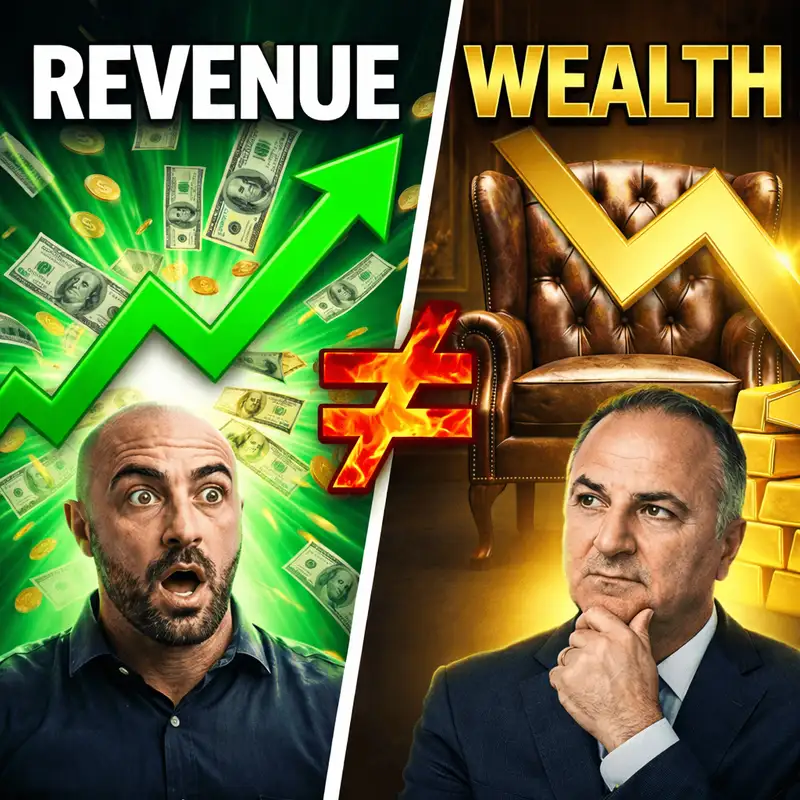
Yeah, it is. And again, revenue does not equal wealth. No, no. The revenue can be seven, eight figures, whatever. Mm-hmm. And your bottom line could be in the red. Yeah. And that's where we were.
I don't think I've ever seen a business where I've gone in there and go, man, your prices are way too high. Wow. I don't think I've ever seen that. Yeah. It's the opposite. Interesting. So that's the side, that's a revenue generating side. Mm-hmm. The cost side. Do you [00:02:00] ever go in like outta the 200 businesses?
Mm-hmm. And say you've gotta talk to your vendors about like either cutting prices or why aren't you on net 30 or net 90? Yeah. Is that something that is a problem or are most.
Welcome to episode two of Wall Street to y'all street. Today's episode is Revenue does Not Equal Wealth. It's a tough conversation. A lot of small business owners, have, issues grasping. And my guest, John Rodriguez, saw this on multiple fronts. First taking over his family's restaurant, that was several decades old.
His father had started it. And grown it to a $5 million a year revenue business. And as you'll see, despite that, um, there were issues at the bottom line. Bonus lesson on this one is also succession planning, which John is kind enough to [00:03:00] share with us, some sensitive, uh, conversation regarding how that succession plan ultimately panned out.
And then the second part is John has extensive experience consulting and advising, uh, over 200 small businesses. Following, leaving his family's restaurant business, he decided to help small business people, avoid the pitfalls that his family experienced. And he learned a tremendous amount, and I was very grateful that he.
I willingly came in and, and sat down with me for a really good interview. I learned a lot from him. He has a, a lot of, insight, over a lot of different industries, so it was, I'm very grateful for him to have sat down with me and I hope you enjoy the episode . I couldn't think of a better book for this episode than Profit First.
I've read this book, obviously I have it. Uh, really, really good book. The subtitle is Transform Your Business from a Cash Eating [00:04:00] Monster to a Money-Making Machine. And there are a lot of good rules in here. There are easy to apply. It's a really simple read. And it's almost like, well, yeah, I knew that that was common sense, but sometimes you've gotta kind of read it again and have it in front of you.
I will put an affiliate Amazon link in the description if you choose to buy it through that. A small portion of that support helps support the channel. Uh, thank you for that. And please subscribe. Click that little button again. It, it helps the channel as well. Revenue does not equal wealth. Episode two.
Enjoy.
I'm here with John Rodriguez, and today's episode is going to focus primarily on, revenue doesn't equal wealth. Right? And so you focus on right now helping companies from an operational standpoint really come in not only with an outside lens, but also with your experience with small businesses as an owner and operator and fixing them, them up and, and [00:05:00] getting them where they need to be.
But before we get into kind of what you're doing now mm-hmm. And, and where you're going and whatnot, take me back to, your, your early years and kind of what. Was the genesis for you wanting to, help businesses? did you always have the entrepreneurial bug? talk a little bit about your background.
Yeah, so I'll go, I'll go all the way back. Okay, great. And, I, I grew up in St. Louis, Missouri, and, my father immigrated from Mexico way, way back in the fifties. Worked in restaurants. Started one, in the late sixties, and then I grew up in that business. I mean, literally my hand prints are in the concrete on the sidewalk there.
I love that. So that was sort of all I remember about my dad was, being the small business owner of the restaurateur, doing a homework and it's tough business. Know the dining room, it's a tough business. But that was, that was my introduction to entrepreneurship was okay. my father in this business that we had this, family owned restaurant and, started working there I think when I was [00:06:00] nine in the basement doing inventory and working with our purchaser.
And then I think when I was about 12, I started busing tables and I started working the front and I, I just, I worked there throughout high school and decided it wasn't for me. And, ended up actually going to music school. Didn't really have any aspirations for business. It wasn't something that was on my radar.
What made you, you wanted to go into music? Was that something you always wanted to go into? Was there something that turned you off in business? Was it because you've done. Since the time you were nine until 18. what? No, I, I don't think so. So I, I was a competitive tennis player Okay. When I was a kid.
Okay. And, traveled, all over the region and, ended up playing probably till I was about 12. And, missed the cut to nationals by one spot. Oh wow. And was devastated and I was sure. Really burnt out. I was, it's funny, I was in seventh grade, but I, I was in an age where my coaches said, this is the age where if you want to take this seriously, it's drop outta school, it's moved to Florida, it is bored, fulltime, go to a, bullet area camp that.
And I said, I don't think so. I, I [00:07:00] don't know that I really have that in me. So I had this huge vacuum of all this time and energy. Sure. And after about three months of me just kinda wallowing around with nothing to do, my parents said. Look, we know tennis isn't a thing, but you gotta find something.
So I started thinking about what I was into and what was interesting to me. And it ended up being music. Okay. And then I took, sort of all that energy I'd been putting into tennis and then I just, sort of pointed it right at music. And I started playing bass and then I started learning about music theory and composition.
And then I guess when I was 16, I went to, Berkeley's summer program in Boston and I went up there and as soon as I got up there, I was this is it. This is what I wanna do. I ended up getting a scholarship there and, went, did my four years there in Boston and then, moved to la, ended up working in the, entertainment industry.
I worked in, produced music for film, for tv, video games, advertising, things that. And then, 2008 happened and the whole bottom of [00:08:00] my industry just kind of dropped out. Every industry. Yeah. It was all connected to finance really. It was. That's what makes it happen. It was, and we were one of the first people on the chopping box because, we didn't have a union, we didn't collectively bargain with any of the studios.
We were usually kind the last line item on a lot of the, production budgets. So about 2009, I was talking to my dad, who was, I guess he would've been in his early seventies at this point, still running the restaurant sporadically. Okay. So he'd been. I'm sure you've heard this story a million times with founders, he'd been trying to pull back from the business for probably about a decade, and he would pull back and, everything would be fine for about six months.
And then he'd start to see things slip, and then he'd get sucked back in. He went through this cycle. I, literally for it was a couple years where he just, he couldn't step away completely. And he kept talking to myself and I have a younger sister and he was telling us, I'm getting too old for this.
You guys are gonna inherit this business. you should get involved. And, dad, I live in la there's only so much I can do. I'm in la [00:09:00] right. I'm doing my theme here. Yeah. Yeah. And then about 2009. I was, my dad and I were playing golf, and he asked me, how are things going?
And I was it's tough out there. I'm, uh, you know, I'm bidding jobs at half what I was doing a year ago. it's tough. Wow. I said, I'm thinking about moving. And he said, moving where? And I said, I don't know, San Diego, Santa Barbara, something that. I just, I want to get out of la.
I really didn't living in la. And, I'll never forget it, he said, he said, John, if you're gonna move, why wouldn't you move back to St. Louis? You have this business here, you're gonna inherit it. it ought to be worth something. I thought he made a pretty good case. Prior to that. Had you tried to help him with, with the stepping back issue or were not, were you were completely doing your own thing?
No. And he was okay. No, I didn't know the first thing about any of this. I grew up in the business, so I knew with hands on though, not, not so much the operational No. That you ultimately moving? No. Okay. Okay. So, but that's what, that's what started it is, as soon as my dad said that and I started thinking about it, I thought, [00:10:00] he's got a pretty good point.
And, that's when I ended up, I, I started doing some things for the business, before I moved back to St. Louis, but I moved back in 2010, and then I was there from 2010 to 2021 when I exited out. Okay. So talk to me about that. So 2010 to 21. Mm-hmm. That's a 11 year run. Yep. And did you figure out the succession, to where you guys could step back?
So, no, I, I wish, but why? I wish we could have. Why, why do you think that is? Is it because it was, in the industry? Do you think it was because things weren't written down or what, what was it? So I think looking back and, having the experience I've had working with, a lot of other owners, my dad was the founder.
My dad had a third grade education, Oh, wow. He, basically got to this country by hitching a ride with a trucker. Landed in St. Louis by total happenstance. Had I think $5 to his name, to no plan. Speak the language. No plan. No plan, no idea what he was gonna do. St. Louis still [00:11:00] segregated at this point.
My dad's half Lebanese, so, oh my gosh. In terms of, work opportunities, it was the field or restaurants that was really it. So he started working in restaurants, started working his way up, saved up money. Ended up, opening up a little American diner, I think in 63, and then, started serving Mexican food.
Nobody had heard of it. People loved it. Got a bigger place, got a bigger place. But my dad, didn't come from a business background or have any of, what we would call sort of business sophistication nowadays. my dad was bright, he was a really hard worker and, he did a lot of great things with that restaurant.
But to somebody my dad, the restaurant was always kind of a cash business. It was always, he was always the one that was up there running it and doing it. And he was the face of the business. He was the leader. Almost a lot of problems that I hear from founders is, they're so deep into it.
Yeah. You, you can't step back and look at the whole, right? Yeah. You're just, you're putting fires out and, and getting, week to week and month to month. You can't think quarter to quarter, [00:12:00] year to year. This is so timely because, we're on the cusp of, or in the middle of the beginning stages of the largest wealth transfer mm-hmm.
In the history of mankind. Mm-hmm. And there are so many, people out there who are inheriting these companies, these assets, and they don't want to have anything to do with it. Yeah. From what I, what I hear and see, they're just sell it. I don't wanna, yeah. so you, you were at the front lines of that.
So dad steps down and you take over fully in 20 times. I, I would say dad steps back. Okay. But, I think our average manager at the time, who was all, they were all friends and family, and they were all in their fifties. Oh. we could, we could throw on whatever titles we wanted. If my dad walked in the door, he was the boss.
Right. and it was, it was that kind of a culture. And, I, so in terms of formalized succession planning, it was literally my dad going, look, just go in there and figure it out. everyone knows you're an owner. Just get in there and, you can imagine how well received that was. myself with a music degree, I'm, 29 years old or whatever.
My sister, who's 26, my dad's stepping back [00:13:00] and we're just walking in there. Right. With literally a management staff that had babysat both of us and changed our diapers. Right. So that's hard to take you seriously. Maybe It was, yeah. I would say it was an uphill battle.
It's you're telling me what to do now. Yeah. Did you guys, did you and your sister go in with new ideas or were you, were you, do you go in and you, you say, I'm gonna take six months or three months or whatever and just look at it and then try to change things? Or did you have such an understanding that you could go in and change things?
Or did you just keep things the same? My sister also didn't have a business background, but sharp, hard work or, obviously stakeholder in the business. I, I, I would say I was, I was brought in there to clean things up. I don't think my dad knew exactly what that meant.
but I know part of his frustration is he would, my parents had started splitting time between St. Louis and California. Mm. So he would go out to California for six months at a time and then he'd say, I come back into St. Louis and I walk into the restaurant and I don't what I see.
Complicate. Yeah. It complicates things. So I would say that [00:14:00] I, I think my sister and i's objectives, 'cause she actually beat me there by a few months and I was still in la. When she'd be gone working in the restaurant and we would talk every single night. She would call me and she'd go, oh my God, I can't believe what they're doing.
Sit tight. I'm gonna be there soon. And I would say our strategy was, let's just get in there and see what's going on. Okay. I think both of us had the good sense to know that, us going in there and wielding a big stick probably wasn't gonna be met very well. So, and I still don't know if this was right or wrong, but my, my sister and i's mentality was, let's go in there at the bottom.
Mm. let's go in there and let's be the people that do all the $12 an hour jobs. I don't, we didn't want anyone to think that we thought we were. Too good to actually work there that, we weren't coming in to professionalize this place sort of on day one mm-hmm. That, we were gonna, get exposed to all the different departments and really understand the operations.
So I, there wasn't a, a kind of succession or a transitional, sort of timeline or anything that. It was let's just [00:15:00] get in there and kind of learn and observe and then, figure out, what, what levers to pull on, sort of when. But the, the idea at first, and it's what I tell everyone who buys a business, is don't do anything for 90 days.
Just get in there and that's your opportunity to learn. I think my sister and I were also thinking about continuity. Mm-hmm. Even though I didn't know what that word meant back then, but Right. We were thinking, fancy word. Yeah. This is, this is a business. Or it was a business that had been in that location since I believe 1977.
There were, I think we had three managers that opened the place. So they'd been there a long, long time. we had a, really tenured staff. That's great. Pretty rare for us about that. Very rare. Yeah. Especially nowadays. Oh, people just jo unheard of nowadays, but I think we even, I think my sister and I both understood back then that, there's a lot of institutional memory here and we can't be the snot noses kids that come up here and sort of flip the card over day [00:16:00] one.
So I, I to think that we were pretty patient and you'll wait 90 days and then flip it over. I would say we waited about six months. Okay. I, I would say, so did you get buy-in? Did you seek out a, as it got closer and, and it's so hard to say because it's yes, I took a plan and I got Jimmy to buy-in, and then Bob, and then this big plan.
But just, just overall, do you think that you had buy-in for the changes you ultimately decided to make? No. Really, no. They were so rooted in, in the way things were. I don't think, and you've been around a lot of small businesses. It's the business looks one way when you don't have to look at the finances.
Oh, so true. So everybody that's in operations, our management staff, our supervisors, everyone's on the floor is going, what do these two want to do? Look at how busy we are. Look at the line, out the door. Look at this. Yeah. But if it's not translating it's money. Yeah, it is. And again, revenue does not equal wealth.
No, no. The revenue can be seven, eight figures, whatever. Mm-hmm. And, your bottom line could be in the red. Yeah. And that's where we were. [00:17:00] this was a business that, There's some debate as to whether we were the first, second, or third Mexican restaurant in St. Louis. But we were, we were, one of the first, so, hopping?
Hopping, yeah. And very busy. We had a, we had still have a really unique property. It was the, second building ever registered in St. Louis County. It was an old Steamboat Captain's house. Oh, cool. Three acres, but it's in the middle of the city. There's a lot of green space. it's a, it's a very unique property.
And my father, for whatever reason, instead of expanding with more locations, she just kept expanding this restaurant. Mm-hmm. And I think when he bought it, there might have been 150 seats, and when I left there were 600. Wow. So we had just keep, we kept building on and building on, and kept expanding. And we get busy.
Well, so we would I think that the thinking was, Friday and Saturday nights when it's nice out. We're turning people away, so we need to add more seats. So we added all this infrastructure and we added all this capacity. Yeah. But it was really only for about [00:18:00] 30 shifts a year. it was for Friday and Saturday nights at the end of spring, beginning of summer when the weather was really good.
And it for, for those shifts, it was great. we had really big nights, we'd push out 12, 1500 plates of food. they were big nights, but the other 735 shifts of the year, we just had all this unused capacity. Right. And we had, we had built this infrastructure for what really amounted to four or 5% of our actual business.
Wow. And, because of that, we had huge overhead. Our r and m was four to 5% of our revenue. Wow. Which for a business that, the. Margins and, restaurants are razor thin ass. Sure. But sure. We had a huge operating burden in this restaurant. And, again, everybody, everybody that's, we used to say upstairs and downstairs, we had our administrative offices on the second floor.
So the, the business stuff was upstairs and the restaurant was downstairs. And I'd be upstairs and all the people downstairs would go, look at how busy, look at how happy, look at the, they just know what they see. They know [00:19:00] what they see. And then I'm getting, the financial statements and I'm going, boy, I know it looks good, but it's not working.
Wow. it's just not working. And, that was, I think that was the biggest problem with the buying. And what could you have done to turn it around to where you weren't in the red? Well, I did. It was basically just financial discipline. we were, for a lot of reasons, it was really difficult for us to generate more revenue.
we had, I said, we were the, whatever, the second or third, Mexican restaurant in St. Louis while between that time and the time I got there, about 150 of 'em had opened. And we used to have customers that would come from 25, 30, 40, 50 miles out to get to our restaurant, but now they had to drive by 20 restaurants that looked just ours.
Mm-hmm. They'd pick 'em off. Yeah. Our clientele was aging. it was the idea of taking, the 5 million of revenue and turning it into 8 million. It just, it, it wasn't, I don't even know if it was possible, but even if it was, you're talking about a huge [00:20:00] investment and what I realized was, there were some other revenue streams, we started, but in terms of the core restaurant business, it was well, we just have to figure out how to get this revenue to make some money.
I don't think that there's a great way to increase the revenue, given our business model and, given the market at the time. So it was, how do we nitpick away at the revenue we have so there's something left over. Sure. And that was, that was how I got involved in finance is I, I realized again, the business was essentially a cash business for a very long time.
That's how all restaurants were. Mm-hmm. And then. As the business grew and as it got more complex, the, the sort of financial, operations and functions hadn't grown with it. it was still kind of being run a really big lemonade stand. And I, I realized when I, my sister and I decided when we got into the business that my sister was gonna be more sort of customer and employee facing, and I was gonna be more.
Business management. So it wasn't long before I started digging through the books and, [00:21:00] trying to learn how to read our financials. I'd never had my eyes on anything that before. But after I, I would say it was probably a couple months of, going through the financials and talking to our CPA firm and our other advisors.
I, I had realized that I, what was really missing in that business was a methodology to connect the financial outcomes to the operational decision making. We just, we didn't have that, our purchaser had par sheets. All of our managers had, scheduling, hourly pars, things that.
We had all, everyone in our operations had all these, metrics they were using, but they had no way to connect that to any kind of financial outcome. Everyone's speaking a different language. Everyone, and, and the two departments never connected in any way. Wow. So that was, that was my big undertaking.
it was probably at six to 12 months after I got there is I thought, okay, we, we've gotta get a way to get all of the people who are managing the operations to understand what's going on [00:22:00] financially. And then we've gotta get whoever is managing the finances to understand how it works with the operations.
And just getting those two departments connected and kind of on the same page and giving them a common language. We became cashflow positive, pretty quickly. Okay. And, again, we didn't change, we didn't really change anything that was customer facing. we didn't do that much in the restaurant.
we did some menu changes, we did some, there were some renovations, things that. None of that really moved revenue that much, but we went from, call it 5 million. To zero on the bottom line to be able to get into, six, 8% margin pretty reliably. Which was good for, it was a big difference for, yeah.
No, yeah. And then, so it's really largely getting that internal house in order that made that difference. Yeah, and it's a complicated business. we had, so we have 600 seats. We're in this really antiquated building. We have 14, you know, meal services every single week. Our prep crew got, or our, [00:23:00] our basement and prep crew open the doors at five 30 every morning.
Our closing bartenders were out at, you know. 11, sometimes midnight. And we were only close three days a year. So I mean, this was ongoing operation around the clock practically. Yeah. And then, you know, you add in like high transaction, very, very low profit per employee, lots of employee churn and um, it's just a complicated business.
There's just a lot of moving parts to it and it really does it, it necessitates having that financial piece really working the right way. Because what we would do is everybody would come up with these sort of. You know, metrics are like goals. You know, let's schedule 200 hours in the kitchen tonight, let's do this.
And that was how our operations were being run. But then we wouldn't get the financial results until, I mean, usually the third or fourth week of the following month. Oh my goodness. So they're all, everybody's, you know, downstairs, all my managers are making decisions that have a huge financial consequence, but I'm not gonna find it [00:24:00] out for six, seven weeks.
That's way too long. That's a restaurant. Serious lag. Yeah. How do you, how do you track the impact of what you're doing and then fine tune it, right? Yeah. To dial it in. Yeah. That's tough. So, okay, so this was almost two decades ago, right? Yeah. And you've learned a tremendous amount since then, and we'll get into that.
But do you think there's anything that your father could have done to make the succession or the handoff smoother? I think so. I think, um, you know, and this, this was something my dad and I talked a lot about, and I think it was you know, we were both, I think, frustrated with the situation because I, I won't speak for my sister, but I'll say you know, I was looking at my dad and going, dad, look, we don't need much, but you do need to tell these people that have worked for you longer than I've been alive, that I'm the decision maker.
There's gotta be some empowerment. Yeah. There's gotta be some kind of formal handoff here. Yeah. And I think that I probably overact with that a little bit, and then my dad pushed back [00:25:00] and went, you know, look, it's just a family business there. You know, this business is all about the fundamentals.
You go in there, you serve food while you do this, everything will be fine. And then I would say, eh, I, I understand that and I appreciate it, but this business, number one. The industry and the business have just grown in complexity. And if we wanna stay competitive, we're gonna have to run it, in a little bit more professionalized manner.
And then you compound that with the fact that you have this, this founder driven business that is now totally transferring its ownership style to having four owners and having no singular decision maker. And it just, I mean, it really complicates the, the management of the business. And I, I mean, I, I, I sympathize with the employees.
I mean, it's not an easy position to be in because, you know, if the four of us didn't know who was running things, I guarantee you none of them did. Which one do I listen to today? Right, exactly. Yeah. Yeah. Wow. My gosh. What do you think you learned from taking over your father's [00:26:00] business this large restaurant that most people in business don't learn like it, it it something that just slaps him in the face?
Is there anything that stands out? Honestly, what you said about revenue not translating to cash flow, I, I think that's the, i I mean, I literally just talked to somebody two days ago who, you know, had their, you know, they, they always have their eyes on hitting this like sort of revenue sort of metric, which what everyone focuses on 10 million.
I don't know why, for founders. Is that the magic number? Yeah, it's like the magic number. But they all think that hitting that number is going to give them all the success they expect, whether it's freedom of time, more cash flow, equity value. And the reality is if it's not generating cash flow, it's just not that valuable.
And I have, I've worked with a lot of owners that have gone through that frustration where they go, you know, boy, when I had a $2 million business and I did everything, it was kind of manageable and now I have a $10 million one, but I have all these employees, there's a lot more moving parts and I'm making less money because, and have [00:27:00] less time and less freedom.
And this. Stakes are higher. And you know, it used to be that a one or 2% swing here or there didn't make a big difference when you had 10% margins. Right. And they have 1% margins. Right. You know, the businesses get a lot more sensitive as they get bigger if you're not increasing that cash flow. And I would say that that's probably the biggest misconception that, that I see particularly with small businesses, particularly with like founder led businesses, is they think that the solve for cash problems is more revenue.
And in my experience that's just usually not the case. Interesting. How do you prevent that? How do you have, say, a $2 million company? Mm-hmm. And you, you, you want to and you succeed jumping to $5 million and then $8 million and 10. million How do you prevent that? It's almost slippage from happening. It's how do you, how in your experience, like how do you prevent that from happening?
You gotta get the model down before you start throwing money at it. Okay. That, that I think is the, the [00:28:00] biggest thing I see is that I work with a lot of like, you know, B2C sort of oriented businesses, you know? Okay. Restaurants, home services, things like that. And, um, usually the founder. They start the business, then they get it to a point of sort of stability.
You know, usually at kind of one to 2 million in revenue is where we usually see that happen. And then they think that all the things that took them from zero to two are the same things that take them from two to 10. And they're, they're actually a lot different. And when you start going on these hiring sprees and you start all these expansion plans and you start, you know, throwing capital around and investment and doing these things, that can start to happen when you have those resources.
If you don't do it carefully, right? It's very easily to start burning a dollar five. To drive a dollar. Yeah. And that's what usually happens in these businesses. Now. There's nothing wrong with spending a dollar five to generate a dollar if you have the resources, if it's part of a plan, if, eventually there's going to be some scale that, brings margin into it.[00:29:00]
But that's usually not the case. It's just more customers, more of just go, go, go, go. And, um, I don't think most. Founders and most people in small business realize how easy it is to get upside down, particularly when you have low margins. When you're in low margin businesses. It just doesn't take that much to go from, we spend 95 on that dollar to spending a dollar five on it.
Yeah. Especially when you want to grow. And you know, now we have to, we have, uh, new hires and, you know, I talked to the CMO that wants us to throw a bunch of money at this marketing campaign and we want to expand. These things are all expensive. They all cost money. And, um, I just think that a lot of times they grow prematurely because number one, they think they're supposed to grow.
They think that that's, that's always the goal. That's success. That's the goal. More revenue. That's always the goal. And I don't think they realize that, that growth from zero to 1 million, you can manage everything yourself. Truth be told, you can manage your business outta your bank account and you can get, you know, a CPA that [00:30:00] just does tax compliance once a year.
And that's generally fine for zero to 1 million, 1 million to 10 million. Totally different in terms of what these businesses really need and financial sophistication and sort of financial function. So I would say that's the, that's the biggest thing I see is the, them mistaking growing revenue for actually growing cashflow value.
Yeah. And it quickly becomes a slippery slope too, because you go from that 95 cents to, for your example, 95 cents to a dollar five, well, then you're taking out debt to cover that spread and then interest starts hitting. Yep. And then you're getting a merchant cash advance. Yep. And it's like 25% interest and, and they're doing daily sweeps outta your Right.
And, and you know where that goes. Oh yeah. So I've seen businesses, yes. Well, and then what happens is, like you said, that they get in this cash flow block, cash flow buying because you know, now they're taking on debt that they have to service, which is eating at it again. But instead of looking at the model and redoing it, they just drive more revenue, right?
So again, we're out of money, we need more. And that's how [00:31:00] this sort of cycle keeps repeating itself. Yeah. Yeah. Do you see that a lot? Is that a lot? Primarily the reason you see companies go under? Yeah. Wow. I would say that one of the, one of the biggest things I've learned and, um, you know, I've spent my whole career really in like small businesses, but I, I know a lot of people that work in enterprise and things like that.
Um, the biggest difference I think between enterprise and small businesses that cash matters in small businesses. So what's like the one dashboard or KPI, you could have that would, would, would be a limiter on that? Like how do you, how do you monitor that? The way I did it in my business is because again, I'm, I'm not an MBA, I didn't have any financial training at all.
Um, the first time our CPA brought that packet to me, our monthly packet, it was 60 some odd pages. Wow. And I'm thumbing through this and I'm going Mike was our lead CP I'm like, Mike, what, which one of these should I be looking at? I'm like, I don't know what this is. And God loved him. He's a great CP, a great guy.
And, but he was trying to walk me through it and I realized. Oh, there, there's gotta be a [00:32:00] way to simplify this. Like the idea that I don't wanna look at 7,000 numbers, right? So what I did as part of rebuilding our finance department was I came up with a report where, um. It, it was a report that was nine lines vertically, and it was just revenue all the way down to cash flow.
So it was like a combination of a three statement packet, but it was in one place. And then you know, month to month we ended up moving to four, uh, four week cycles. But for every cycle I could just see at a glance, mm, this was money in, and here's exactly what happened to cashflow in the bank. And that became helpful because it, it, it does require some sophistication to be able to go through a p and l and then to understand, you know, a cashflow statement.
I mean, you have to, number one, you have to do some digging, but you have to understand, a fair amount about accounting. And I thought that was a really easy way to just kind of summarize it so I could just at a really high level, I could go, okay, revenue's up, gross profits, where we thought it should be.
We have EBITDA where it's at. Cash flow's way [00:33:00] down. What happened? Okay, well then I go and look at the statement, cash flow. It turns out we had this big investment or something like that, but it connected revenue to what was happening in the bank. And I think that's what most small business owners really struggle with.
I mean, I've, I've worked with a lot of 'em, and one of the first questions I always ask 'em is like, you know, what's the, how do you manage your finances? And it's usually some version of the cpa a firm sends all this stuff over, but I don't really look at it 'cause I don't understand. They literally tell you that my CPA sends Oh, oh, yeah.
Yeah. Really? Yeah. I, I, I've seen some financial packets for like $3 million businesses that would make, you know, Wharton, CFAs, blush, just the level of sophistication in financial engineering and it's like, it's just unnecessary. Right? The more, the more difficult it is to understand, the less they're gonna use it.
You gotta keep it simple. You've gotta keep it really, really simple. You know, if a, if an owner's gonna be able to use it and if it's going to inform their decision making, then they gotta be able to understand what's in there. Right. Yeah. I can't [00:34:00] intimidate 'em. They have to be able to wanna open the file.
Almost wanna draw and cran, right. So they'll, they'll take a look at. Interesting. Wow. What I tell all the owners I work with is what you should be looking at every month should fit on one sheet of paper, right? That's it. If it takes, and if you need to dig in, you can dig in, then you dig in. Sure. But this is what gives you the 10,000 foot view, so you're not losing sight of what's happening to cash, what's happening to the larger revenue trends, you know, what's happening to, you know, gross profit or something.
This is how you look at it at 10,000 feet. And then it tells you where you need to go look closer. Because when you're trying to look at everything all at once, it's just, it's impossible to get any context or to pull any kind of useful information out. So that's, I'm one of the things that I think makes me kind of unique in finances.
I'm one of the very few guys that goes into most businesses and goes, get rid of 80% of it. Get rid of it. You don't need to see it. That's why you have a CPA. Let them worry about that. We're just gonna worry about the six to eight numbers that really drive this business. [00:35:00] We're gonna get really focused on those.
We're gonna get really good at managing those. And I see that get a lot better results than trying to get owners to learn how to read a three statement packet. I mean, it's pretty simple. It's revenue cost of goods gives you gross profit. OPEX gives you ebitda. . Non opex gives you net income, and then balance sheet adjustments give you cash flow.
Boom. So it's the, it, it's, it's uniform for any industry. Okay. And then, you know, again, that's not the be all, end all. This is just where you start to make sure that you're solving the right problem, just snapshot. And then if you need to dig in, like that's when you get the three statement packer when you go digging around in your ERP system or QuickBooks or, you know, for us it was like the POS data or something like that.
That's, you know, that's what tells you the signal of where something is going wrong. So, you know, you're looking in the right place and solving the right problems. This also goes to the whole notion of being able to duck out of a business because it's not just succession, it's also getting it ready to sell.
Yeah. And if you don't have these data points mm-hmm. And [00:36:00] all this information in order, it's kind of like when you go to sell your used car. You wash it and vacuum it and get the oil changed first. You don't just list it yourself or your house. Exactly. Clean out the ad, whatever. Right. And so yeah, if you have, if, if you have somebody that wants to buy a restaurant, you can't go look at the line out the door.
Yeah, exactly. Look at all these people, open your eyes, you know, but it's one of the 12 days outta the year where all 600 seats are filled. Mm-hmm. So the premium on that, and this is something I see as a lawyer, is, is a lot of times business owners, they, they have in their mind, it's worth a certain amount because they just go off of what they see without looking at the numbers.
And it's like, you could literally get 40 to 50% more for your business if you just take three to six months to clean all this up. Oh, yeah. And, um, how do you, it's a struggle from a legal perspective, but you're brought in from a financial perspective. How do you handle that? Because in my experience, a lot of times owners, they don't want to go through that effort or make mm-hmm.
What they see as changes. Do you see that? I've probably had my eyes on like 200 small businesses and their finances. I've probably [00:37:00] seen six that were ready to go to market. Wow. Like really like finances where it's like, look, if you got the PE knock on the door today, like you're ready to go.
I mean, it's really almost turn key. Really rare. Yeah, really rare. I, I think that number one I think owners make a huge misconception about what selling a business is like and what marketing a business for sales like, and, you know, what the process of, you know, due diligence is like. I think they really underestimate that.
And then they don't understand that the things they care about in the business are probably not gonna be exactly the same as what a qualified buyer. Cares about in the business? Different lens. Different lens? Yeah. Different language, different metrics, different goals. You know, whenever I do, uh, whenever I have like exit planning engagements with, you know, any owners one of the first questions I ask them, because valuation is always the, it's always the sticking point.
And it's when I get to right up front start talking about their business and their plan, you know, I wanna sell, I wanna do [00:38:00] this. And okay, great. Who do you, who do you think is gonna buy your business? And they always say somebody like me 20 years ago, and I go, did you have any money 20 years ago? And they go, no.
There you go. A hundred percent seller financing. There you go. Oh man. That's funny. That is funny. So what are the warning signs in your experience that a business isn't sellable? Because it sounds like 200 of them, out of those 206 we're ready to go. What percentage would you say roughly, it's just like, this isn't going to happen.
Like it's too far gone. Like you're not to where you need to shut down. Yeah, yeah, yeah. You are years away from exit. Do you see that? How do you handle that 80%. Really? Yeah. How do you handle that? Can you help that? I think that the first thing I do is I, I try to explain to all of them that look they all have a price in their head.
It's usually a lot more than it's actually worth. But I tell them, look, if you want to get, $6 million for this business and you want the kind of [00:39:00] buyers that are qualified that are going to pay that, then the first thing you have to understand is what they're gonna expect in the financials.
'cause that's where they're gonna start. They're gonna be interested in all kinds of different things in the business. They're gonna look very deeply at, every single department. But they're probably gonna start with the finances. , That's really, that's the disqualifier.
, For most of the best buyers out there. So the first thing I tell them is right now, , you're bearing a lot of personal expenses in the business. You've been trying to reduce that net income line so you can save a few nickels and taxes, and you've been doing that for years.
So when you show these finances to a professional buyer and go, , yeah, we did 6 million and we made $81,000, but it's actually 700. . They're not gonna believe it. So the first thing you're gonna have to do is you're gonna have to go through a minimum of, I think it's 15 months of cleaning up and actually showing the profitability of the [00:40:00] business.
Because a good buyer's not gonna believe it when they see it for three months. It's really gotta be on the books for a year cooked in. I think it has to be cooked in Yeah. For them to take it seriously. Even if everything else about the business is perfect, just to, to get it by their team, their lenders and everything.
Like your books are gonna have to tell the story. 'cause I can tell you right now, nobody goes into a lender and goes, yeah I know it only shows 90,000 on paper, but they told me it's closer to 800. It's so true. It's never gonna work. It's so true. Sellers often either discount or completely disregard the fact that buyers have pressures on them too.
It's not just yes, unless they're an all cash buyer, but they're probably more sophisticated in a repeat player. So they're going to have the lens of a lender. But if you're subject to any kind of, whether it's SBA or just some other loan program. It has to pass muster, right? That debt service coverage has to pencil out.
Yes, exactly. That takes time. Exactly. Even if the business is perfect, it's gonna take, I think it takes at least a year and a half, to really make those changes look permanent, to [00:41:00] get the books telling the right story of the business. That takes some time, but usually there's also a lot of structural things in the business that, need attention, and it's owner independence.
That's really the big one. Those are the two, I, if you were to ask me like, why do. Whatever the number is, 85% of small businesses not sell. Or, why do they go through liquidation instead of a sort of going concern sale or whatever. Those are really the two big ones.
It's the finance is not telling the right story and not being believable, and then it's the owner just wearing too many hats and it just, it introduces too much transitional risk, dual buyer. And, a founder might love working 70 hours a week and making a fortune, but believe me a professional buyer doesn't want that job.
No. They don't wanna buy a job, okay, so we kinda got, we went forward a little bit. So 21 you're outta the restaurant. Yep. And then where do we go from there? So I'd been, so my father passed away in 2016, left a vacuum of all this.
And, at this point I think we had nine different entities. Wow. And we had asymmetrical ownership in all [00:42:00] of them. You wanna talk about kinda a messy cap table ownership structure. It was tough. My family and I just never really figured it out. We had, my mother and my sister had, one idea for the business.
I had another one. I don't know who was right, it was wrong, but, I thought I was yelling at each other about it for another year. Probably wouldn't solve anything. So I tried to buy them out and I had a plan for, redeveloping the property and things like that. They didn't wanna do that, so I said, okay, I think it's in the best interest of, this business and the employees and our next Thanksgiving that maybe I step out then.
So I, I left in 21 and I started thinking about, I mean I was at the business for 11 years and, I started thinking about how can I take everything I learned there and, leverage it somewhere? What's the best kind of next opportunity for me? Had a 1-year-old daughter at the time, and, never loved the idea of starting a business.
And I thought the idea of buying once sounded interesting because I'd already done that. It's again, my hand prints were on the sidewalk and everything, but it was still coming in cold to an existing operation and then, trying to [00:43:00] professionalize it. And so I thought buying a business made a lot of sense.
I actually got very close to closing on one when I was still living in St. Louis and, another restaurant. Okay. In St. Louis. Okay. I had started reading books on buying a business and things like that and looking stuff up online just to get familiarized with it because it was something I didn't understand at all.
And, literally I was still at the restaurant working. I hadn't exited out yet, but I started reading about how this whole space worked and everything and I thought, I'm gonna go look at biz buy sell. Why not? Let me see what's out there. I go in and I put a couple of my filters in down Pops a restaurant, St.
Louis remotely managed 700 KSDE, 22% EBITDA margin. I'm going, okay, this looks interesting. It's remotely managed. I can still move, I can still do this. It was just a shot in the dark while I knew the restaurant the owner was coming in. He lived outta state. He was actually coming in like three days later because he would come in every other weekend.
The broker said, why don't you go up there and meet him? He's really nice guy, really [00:44:00] sharp operator too. And, I had given them an IOI and they said, yeah, why don't you go up there and meet with the owner? Oh, great. Three days later I get an IOI accepted, I'm sitting down with the owner, I'm doing a walkthrough.
We ended up talking for a few months, putting a deal together, and it was a done deal. I had the financing lined up, we had the lease figured out I was gonna work with this regional manager on the transition, it was done. Then COVID hit Oh and took the whole deal with it. Yes. But that was literally.
Yeah, literally that was the first listing I ever even saw, and still to this day, I've probably looked at a few hundred of 'em pretty closely. It's still the best business I've seen. Wow. Wow. Okay. So you had such intimate knowledge with your father's restaurant. Which you were running with your other family members at the time, and then you get to look at this other restaurant.
Was there anything in looking and doing your due diligence, you were like, oh my gosh, why weren't we doing that? The ownership group of [00:45:00] this restaurant. So it was three restaurants in three different states. Okay. You were buying all three or I was only buying one. The one there.
Okay. So the two owners, were both in their seventies. They wanted to retire. They had employees that they wanted to sell. The other two, restaurants too. The one in St. Louis, the general manager was leaving. That's why they were putting it on the market. They just, they, it's fortuitous. Just, and you happened to come across it.
I just, I happened to be there and. Excuse me. So the owners that had bought this, they bought the entire group from the founder because they had exited out of a company when they were like 40. Just wanted something to do. But the owner that I was gonna buy the restaurant from was an accountant.
So I look at these the books are obviously pristine. Yeah. Beautiful books, which the only other set of books I'd ever looked at were ours. I had no idea what other small businesses, books look like, but from a, I say from a business perspective, like this really was about as good as it gets.
Wow. The [00:46:00] owner was super sharp, really nice guy, very cooperative on the deal. Was standing up a portion of a equity stake for the SBA had co-signed on. The lease, because it was part of this huge development, was loaning me, his general man or his regional manager for free to help with the transit.
No. Awesome guy. Can't say enough about him. The business itself was great. They were, uh, doing between 22 and like 25% ebitda. Wow. Like clockwork. It was only open seven shifts a week. Wow. No, it was a Teki restaurant. Wow. Okay. So no catering. No parties. Very focused, takeout. Very focused.
Yeah. The opposite of what your experience was. Total opposite. Yeah. And they had just, it was part of this larger kind of hotel development in St. Louis and they had just moved the restaurant the year prior and they had split basically the, the ownership group and the landlords had split the cost like 50 50, but there was no CapEx on the [00:47:00] horizon.
This was, the restaurant was built out beautifully. The model worked great. They hadn't changed the menu in a decade. It really was, wow. It was a fantastic operation. But here I am spoiled that this is the first thing I ever look at. And then COVID comes, takes the whole deal with it. And I go we're gonna move to Texas.
I'll just find another one of these. They're falling out of his by cell. I had no idea. And I was gonna, just to give you a little bit of context. My pro forma showed this showed the actual, like the actual burdened, levered cash flow at four 50 to 500 a year, and I was gonna buy it for 1,000,009.
Oh wow. With 5% down, 5% on full standby. This was sweet because I give the guy that owned it so much credit because , he didn't need the money. He just wanted to see somebody take care of it and succeed. Yeah. And he had other offers from some, bigger restaurant groups and things like that, but, and I'm sure they would've paid him a lot more money for it, but he really liked the idea of an independent operator taking it [00:48:00] over.
And, he was great in the deal and we were right there. Yeah. And then the lockdowns hit and then. You think you, you're in the development that's dependent on traveling. Yeah. All the permitting, crows, communal, all the financing. Yeah. Every, yeah. No take I, it's just it's as bad as it gets getting, supplies.
Just the port issues and it just cascaded Yeah. In ways no one understood. Yeah. When that first hit. But, so that was my sort of entry into, small business, acquisitions. And then my wife and I decided to move out to Austin because my wife and I both grew up in St.
Louis, but we'd lived all over. I'd lived in Boston, I'd lived in la, she'd lived in Chicago, she'd lived in la And we had always thought, if I wasn't. The main reason that we were in St. Louis was because of these businesses. But we had thought, if we didn't have these businesses, if I exited out that, maybe going somewhere where the weather's a little bit nicer, the economy's growing a little bit more.
The schools were a little bit better. So we decided to move here. And, that was my plan was when I moved here. We moved in, I think [00:49:00] July of 21. And I, when a lot of people were coming into Austin at that time, everybody, yeah. That was, we moved in July of 21 and I gave myself 12 months, which I look back now, I think that's not nearly enough time to go to a new city and try to acquire a small business.
But you first have to get your bearings right. Yeah. Live and learn. But I gave myself those 12 months and, again, I had this experience with this one acquisition, so I knew a little bit about it. And when we moved out here, I put together my broker packet. I had my, bio investment thesis.
I had my pre-qual letter. I had the whole thing, and I went and I dropped it off to every broker in Austin. And they all just laughed their ass off because they literally said, look, you're a nice guy. I get 10 of these a week. Oh, wow. And I'm not doing SBA deals. Like we're getting small businesses at four or five turns in cash.
Like why would I. Subject my sellers to this, which I totally understand. I was looking at, similar businesses, kind of 4, 500, 4 5, 600 SDE range pushing those past three and a quarters really [00:50:00] hard . On an SBA loan because the debt service coverage has to pencil out.
And I have to pay myself. And, so I just, I wasn't competitive on any of the, better businesses. I was looking at a lot of the kind of bottom of the stack businesses, they would get a restaurant or something and then they blast it out. They send it out to their network and when nothing comes back, it's let's call John.
So I was looking at a lot of those businesses and, do we have a deal for you? Yeah. Oh. Got some of the conversations I had, but, I think I wrote. I wrote about, I think eight to 10 Lois. But all the businesses were marginal. There were all restaurants, no. Oh, okay. No. All kinds of things.
Okay. In and around hospitality. Okay. 'cause that's what you knew and were comfortable with. Yeah. And if you don't have an MBA, a lot of SBA lenders are gonna want to see that, you've gotta be able to connect your experience Sure. In some way to the business.
Yeah. Some operational teams doesn't have to be a Mexican restaurant, but it's gotta have something to do with hospitality. So I looked at like wedding venues and event venues. I, road an LOI on like a. Printing a [00:51:00] small run print company two restaurants, a lot of different businesses.
One of 'em was a real estate lead gen business. But they were all just too risky. , I would get to, I would start digging underneath the hood on these businesses and, you're staring down that personal guarantee of an SBA loan. And it's no joke. Yes. And, the biggest problem I saw was owner dependence.
That, one of the, one of the things that I think is really challenging with small business acquisitions is I would say sub $10 million. You're transitioning ownership, but you're also transitioning management. And that's a lot to do at once. Interesting. Again, to sign that personal guarantee, to know the cash flows, 40, 45% of that's going out to the bank.
And you're gonna come in here not just as a new owner, but as the new leader and the new manager, there's just a lot of risk for most businesses. And that was the problem I had with the businesses that I looked at, is I would just, I would start digging behind the financials and start really thinking about it.
And I'd start doing sensitivity testing on [00:52:00] financial modeling, and it's man, we lose this one. Customer revenue goes down 15%. I'm gonna have to decide whether I pay myself or the bank. And I just, I don't wanna put myself in that position. But throughout that process of looking at businesses and I had no network out here.
None. My wife and I knew one person I played tennis with 30 years ago. I decided that, I needed to get out and I needed to meet people. And, I started going to a lot of networking events and things like that. And but I would tell everybody is, I would say, look, if you know anyone that owns a small business that's even considering selling.
I wanna meet 'em, even if it's not right for me, they'll benefit a lot just hearing, the opinion of, a buyer. So I started meeting with a lot of owners and then I started consulting with 'em a lot of times because I go, Hey not right for me, but I, I'm happy to help out if you want to know.
So I started doing, consulting work and then I had decided I guess this was like spring of 22, that like, okay, if I can't get one over the line, 'cause I gave myself that 12 month deadline that, this is what I want to do. I wanna take this [00:53:00] experience and I want to help, other owners.
And then when the deadline came and went, it was literally like June 29th I got an LOI rejected. When it came and went, that's when I decided to get my CPA designation and start working with other owners. And that's how I got into the kind of consulting, advisory world. Interesting.
And that's when you saw , the 200 businesses you referenced earlier and. And saw it sounds like a lot of the same problems. Yeah. Over and over again. And it's amazing because , we hear all these little sayings , on the social networks and stuff, and it's , hustle this, hustle that. , But a lot of the same problems that are industry agnostic aren't addressed.
Totally. Yeah. Talk a little bit, you've already touched on a lot of it, but talk a little bit about what are some of the common problems you've seen that you think, that you go in and you know you're gonna find this problem. So it's a sub $10 million revenue business. The owner's been with it for 30 years.
Is there a tell, you're gonna see these three problems? I would say if you bring a hundred founders in here. I would bet [00:54:00] 80 of 'em, the numbers are a mess. The prices are too low and the owner's doing too much. Interesting. Those are the three that I would say I see.
I would see the most often. Those are the three kind of like greatest hits of the problems. I see. And all of 'em think they're the only one. I was the same way when I owned my business. I remember thinking, oh, there's no way other business, there's something wrong with me.
There's something all these other businesses must have it figured out, and very few of them do. You know that's just the reality, that's part of what makes interesting. I think working at small business is fun, is there's a lot to solve and you can, work quickly and they're smaller teams, but most of 'em, they at least have a few masses.
And I would say those are the big three that I see. So interesting that you said pricing because that, yeah. That's not something you think of and it's so hard. Because you don't wanna raise prices because they know people won't come and Yeah. And whatnot. Is it tough to get owners, like even when you put numbers in front of them Yeah.
And say your competitors are pricing at this . And their sales are, . The same, but [00:55:00] that means their margins are,, how do you explain that to them? Do you get them over the line on that? I would say I usually do, and there's always that fear. They all have that fear. And the way I explain it to them is, let's say you're charging a hundred dollars for a service number one, the broader market's charging 130.
Do you want to be a value play? Being a value play for a small business, I think is generally a really bad strategy. But what I tell all of 'em, because most of the, the people I work with, they've been in, they've been in business for some time. Usually, , how much have you raised your prices?
Since when you open the door and then you realize that their prices have barely kept up with inflation and you just go, are you any better at doing what you do now than you were 10 years ago? You go, of course I am. And I go, then you should charge for it. There's nothing wrong with charging for that.
Most of the, the small business owners I work with, they price very defensively, or they price reactively. They run outta money. So they go and raise their [00:56:00] prices. And one of the things I did in our businesses, and they've done for other businesses, they go, look, every quarter you gotta sit down and look at your pricing because you are not obligated to offer anything at a discount And.
I think if you do it the right way, I think quarterly's a good sort of schedule. Oh, really? I think so. Just to analyze your pricing, look at it quarterly, look at your competition, look at your costs. And I would rather see owners, doing, a half a percent every quarter. Than waiting until they have to do 10% every five years.
Because that's what most of them do, is they just wait until they literally can't keep the doors open. And during that five year period, they're making a lot less than they should. They're making a lot less, it creates problems. And your customers will not notice you adding 7 cents to something that's $10.
When you have to go from 10 to 13, they're gonna notice. And that's when it's really gonna hurt. And I always tell all the people I work with, all your customers go to the grocery store. They all buy things. They are used to things getting more expensive [00:57:00] over time. And I found that fear is, it, I can't think of one instance where I've recommended a price increase and it's really been met with a ton of resistance from the customer base.
It never does. In our restaurant, our. Our biggest seller by far is our house margaritas. And we were 14 ounces, half hard liquor. We were selling 'em for 5 95. And I I went and looked at, what other place is charging or whatever, and it seemed kind of seven, that was short of the median difference.
Yeah. And a lot less alcohol. So I went to my staff and I said, look, the five 90 five's over, and their response, we've charged that for seven years. And I go, that's the answer. I'm glad you're on board. Yeah. It's seven years. It's time to increase the price. So , I talked them into going up to six 50.
I got all kinds of resistance from every Wow. The bartenders were scared to death. Everybody, nobody mentioned it. Nobody brought it up. It did not affect volume one bit. Even if it did, you can do the math where the volume can drop [00:58:00] a certain amount. Yes. You're still going to make more money. Yes. And you have less wear and tear and machinery.
You have less labor issues. Yeah. Wow. Interesting. Do you ever have it to where. Is there a large percentage where prices are too high? That's the problem? I have yet to see that. Wow. Now , what I will say is, , one of the things I see a lot in bus, in smaller businesses is they, . They get a little bit of that like shiny object syndrome and it's like they, they do this one thing and they do it well and it creates a good business.
And then they see this other opportunity over here and then they see one over here and they do this and they, they end up getting scattered and , they start getting all these different revenue lines. And then one thing I do see happen a lot is because all these different revenue lines are going into one bank account or because it's dropping down on one side of financial statements.
They have no idea what the contributing margin is . On any of those differing things. And then that's when I'll see the pricing get outta whack. When we will sit down and we'll go look, you have these four revenue lines. One of 'em makes money and it's subsidizing the other three because they're all losing a nickel for every dollar.[00:59:00]
That's usually what I see. So the only time I would say that I see the prices are too high. Is when, because the owners have all these different kind of revenue lines going to one place and they don't understand their actual cost to produce something, then they'll end up pricing something a little bit too expensive sometimes.
But just in general, it's, I I don't think I've ever seen, I don't think I've ever seen a business where I've gone in there and go, man, your prices are way too high. Wow. I don't think I've ever seen that. Yeah. It's the opposite. Interesting. So that's the side, that's a revenue generating side.
The cost side. Do you ever go in out of the 200 businesses . And say you've gotta talk to your vendors about, like either cutting prices or why aren't you on net 30 or net 90? Yeah. Is that something that is a problem or are most I never do that. Okay. I have found that, working on cash conversion cycles and, squeezing vendors and things like that, at the enterprise level when you have a lot of leverage over those [01:00:00] relationships and where, literally going from 45 days to 35 can be, hundreds of thousands of dollars of free cash flow.
I understand why they do it at that level. What I tell most of the owners I work with is you don't want to be the vendor. Nobody, or you don't wanna be the business that no vendors wanna work with, and you don't want to, you don't wanna be the guy that's squeezing them every opportunity. You leaving a percentage of margin on the table to have really good relationships with your vendors.
I I think that's a better strategy. Okay. I don't like the idea of small business owners, nickel and dimming on terms and, on pricing and things like that. I just, I don't think it creates good relationships. And to me, the relationships you have with your suppliers, with your vendors with your customers, those are a lot more important than whatever cash is gonna be freed up once by, extending terms or things like that.
I just, I don't think it's the best strategy for small businesses. Yeah. They are your lifeblood. You kinda can't do business if you don't have your deliveries. Yeah. On time. That's, that's just not gonna [01:01:00] happen. Interesting. So just going back on the succession.
Yeah. What is a simple succession planning item like every business owner could do, say, this month or this quarter? To increase the likelihood that the next John Rodriguez can take over. Is there one thing that, that they can do? I would say have the hard conversation about expectations as early as possible.
Timelines, money, equity. I would say the worst successions I've seen, and I wouldn't put mine among them, like not even close. I've seen it unfortunately, go really ugly. That usually seems to be at the root of what creates most of the problems when that transition doesn't work out well.
The founder thought they were gonna be taking all their distributions first, no matter what happened. They, told the, son that came in, they could pull a salary and he's pulling 2 75 or, there's, the incoming person thought they had free [01:02:00] access to all the lines of credit and to the capital and the business to do expansions, and then the founder thought that they were the ones that were able to, veto that there's this misalignment or this miscommunication of who owns what and who's entitled to what and who's making what decisions.
And again, it doesn't have to be super formal. You can do it on a cocktail napkin, but I think the earlier that both sides can get an understanding of what. Either side expects out of that transition. I think that's the most important thing. And really just equity and access to capital and responsibilities.
If you can sit down and cover those three things, that's gonna prevent a lot of the sort of worst kind of train wreck transition. So having these conversations a year or two Yeah. Years before, yeah. Not six months. You can't have 'em too early, right? I don't think. Okay. Oh wow. Okay. I wouldn't do it when you're Right.
When you're success, when you're putting your six years old, you putting your hands in the concrete, right? Yeah. Yeah. I would say, Hey little Johnny, let's talk about succession planning. You're nine years old. Yeah, I would say a couple years. Okay. And, I'm a little contrarian on [01:03:00] this. I don't think you should ever gift away any equity.
Yeah. I think that and you can have the parents loan the money to the kid to pay or whatever, but there's gotta be some transaction that establishes a valuation. Tell me why. Because I think that both parties need to understand what's being exchanged, and it has to be quantified because I've seen, this could have happened in like my situation, it didn't, but there could have been a point where my dad could have easily been upset because he handed over this gold mine, but then my sister and I are going, there's no money.
Yes, there's revenue, there's legacy, there's history, but there's not enough money moving through here. I think that having that, I. And it doesn't, I wouldn't recommend anyone get A-C-V-A-I, I think that's overkill for something like this, but making sure that both parties are in agreement to, Hey, this is what it's worth and this is what's being exchanged.
I think that can also head off a lot of these disappointing financial [01:04:00] outcomes that happen in families. When, everybody wants the business to take off after succession. That's what everyone's rooting for, you know? But it doesn't happen a lot of times, A lot of times the business, doesn't perform the way everyone expected it to.
Well, who's entitled to what in that case, that can get really ugly when both parties never agreed on what was actually being exchanged. Yeah. And you value what you pay for and you take care. Yes, absolutely. You take care of absolutely. What you pay for. Yep. Interesting. That was wonderful.
That's a great stopping point for me. Thank you for this. That, yeah. That was very, thorough and insightful and, this was awesome. Yeah. Yeah. Thanks for having me. I talk about this stuff all day. Yeah. That was great. All right.